For decades, “private label” meant one thing to shoppers: the cheaper, plainer option next to the real brand. Store-brand packaging was functional at best, forgettable at worst, and it existed mostly to undercut the national brand on price, not to compete with it on quality or appeal.
That perception is changing fast, and honestly, it should. Today’s most successful private label programs don’t look like the budget option anymore. They look like brands. Real ones, with real design thinking behind them, real ingredient stories, and real shelf presence that can go head-to-head with the more expensive national names shoppers have known for years.
That’s exactly the transformation we led for Lowes Foods, a regional grocery chain across North Carolina, South Carolina, and Virginia when we reimagined their private label program from the ground up. Here’s how strategic packaging design turned a store brand into a genuine market share threat, and what any retailer sitting on an underperforming private label line can learn from it.
The problem with most private label packaging
Private label has always had a built-in disadvantage against national CPG brands: name recognition. Shoppers already trust the brands they grew up consuming. A store brand has to earn that trust in the two or three seconds it has someone’s attention on a shelf packed with familiar logos.
Most private label packaging doesn’t even try to close that gap. It plays it safe, sticking to generic layouts and minimal differentiation, and as a result, it usually delivers exactly what that design suggests: a basic, forgettable, budget alternative.
For Lowes Foods, the challenge was bigger than any single product. They needed to reimagine packaging across more than 1,500 SKUs spanning every center-store category, all while staying fully compliant with FDA labeling guidelines. That’s not a single design project. That’s a full brand system that has to work as hard on a jar of pasta sauce as it does on a frozen pizza box.
The solution: make the store brand feel like a discovery, not a substitute
Instead of designing packaging that apologized for being the store brand, we built the Brown Bag packaging system around a completely different feeling: the experience of shopping a local farmers market. Natural. Reliable. Something you’d feel good putting in your cart, not something you’d settle for.
That meant creating a packaging system that was:
- Consistent enough to build brand recognition across 1,500+ SKUs, so shoppers could learn to trust and recognize the Brown Bag look no matter what aisle they were in.
- Adaptable enough to flex across wildly different product categories, from frozen foods to pantry staples, without losing that core farmers-market feeling.
- Genuinely appealing on its own merits, not cheaper-looking, but a package a shopper would actually want to pick up ,read and put in their basket..
Great packaging design does more than decorate a product. It sets an expectation before a single bite is taken, and it was that shift in expectation, from “cheaper alternative” to “better choice,” that changed how shoppers responded.
The results: private label products started outperforming the national brands
This is the part that gets retail category managers’ attention. In the first year after the new Brown Bag packaging rolled out:
- Frozen pizza sales surged 98%, while national brand frozen pizza sales dropped 2.6%.
- Pasta sauce sales grew 44%
imilar lift patterns showed up across other reimagined categories.
This isn’t a modest bump; it’s an outright shelf victory. A store brand is beating national giants at their own game—not by competing on price, but by outclassing them in design and brand strategy.
The results were strong enough that Wildfire and Lowes Foods have continued expanding the Brown Bag line across 1500+ SKUs, adding premium labels and sub-brands that on that same foundation.
It wasn’t packaging alone. It was packaging inside a bigger brand experience.
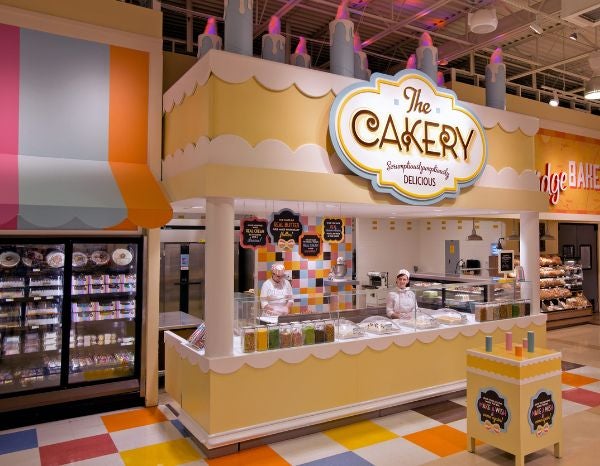
Reimagined packaging worked as well as it did because it didn’t exist in isolation. Lowes Foods paired the private label redesign with immersive “store within a store” concepts including destinations like Chicken Kitchen, Cakery andSausageWorks, each with its own custom packaging, signage, and in-store personality built around the same principle: make the shopping experience feel like a discovery, not a commodity purchase.
Those combined efforts drove measurable results across the business as a whole, including a 7% increase in basket size and a 23% increase in transaction volume following the initial rollout. These strongresults ledLowes Foods to shift from closing underperforming locations to renovating and building millions of square feet of new retail space.
The lesson: packaging design doesn’t operate in a vacuum. It’s most powerful when it’s one visible piece of a bigger, cohesive brand and in-store experiential strategy, not a standalone project handed off to a print vendor.
What this means if your private label program feels stuck
If your store brand is still playing defense, positioned purely as the cheaper option rather than a genuine competitor, that’s usually a design and strategy gap, not a product quality gap. A few questions worth asking:
- Does your private label packaging actually build brand recognition across categories, or does every product look like a different, disconnected line?
- Would a shopper choose your store brand because they want to, or only because it’s the cheapest thing on the shelf?
- Is your packaging strategy connected to a bigger in-store brand experience, or is it working alone?
For Lowes Foods, closing that gap meant turning private label from an afterthought into one of the chain’s biggest competitive advantages.
How Wildfire approaches retail and private label branding
This is the kind of work our creative and strategy teams live for: taking a category that’s usually treated as an afterthought and turning it into a genuine growth driver, backed by consumer research, real design craft, and a strategy that connects the shelf to the full brand experience.
Ready to make your private label brand a real competitor instead of just a cheaper alternative? Let’s talk.